

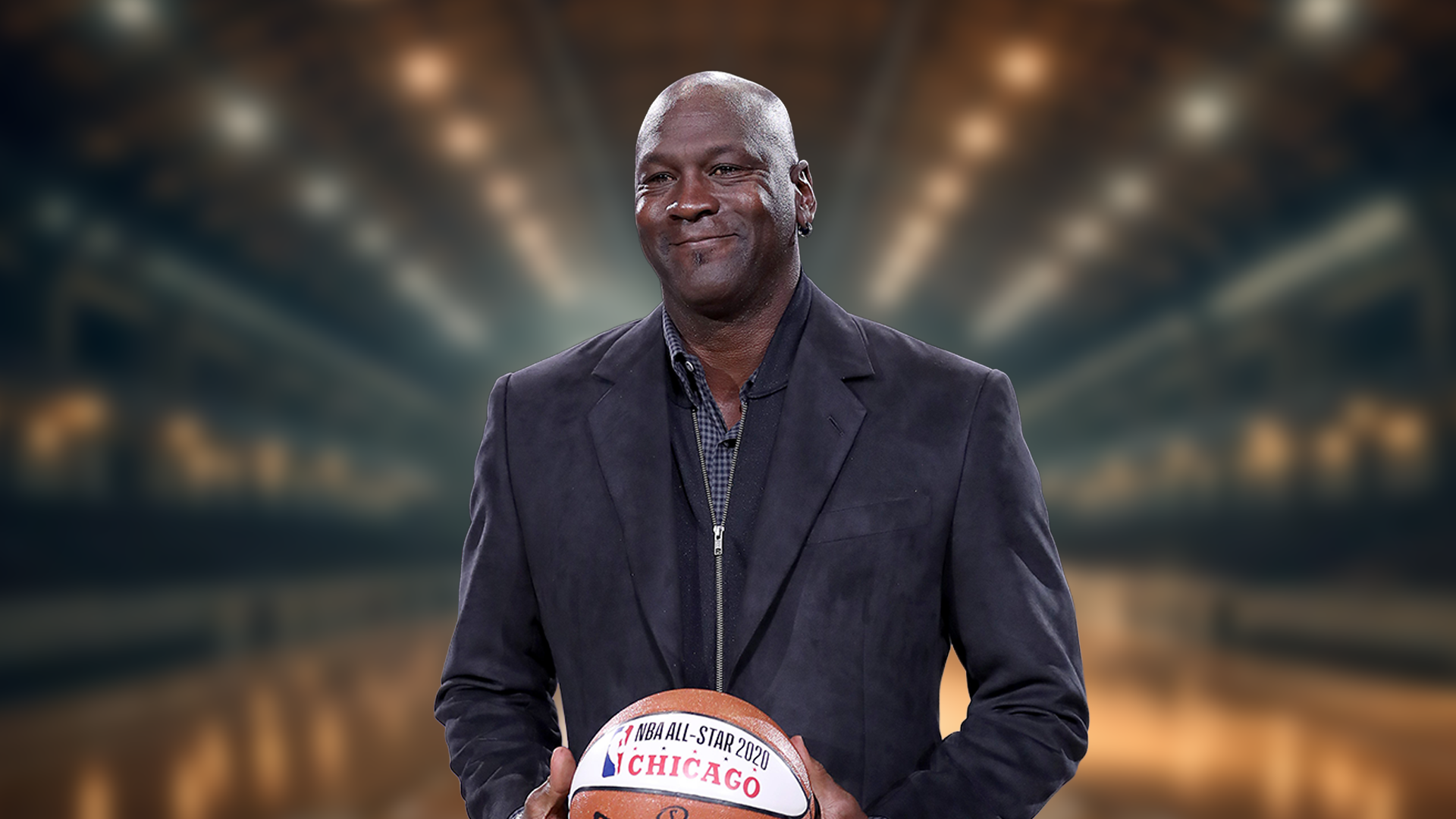
There are moments in history when a single decision quietly alters the future, long before anyone recognizes its magnitude. In 1984, when a young Michael Jordan walked into the Nike headquarters as an uncertain rookie, he had no idea he was stepping into a destiny far larger than the game he loved. He wasn’t thinking about empires, royalties, or global branding. He simply wanted a shoe deal that felt right. Yet that seemingly ordinary meeting, born out of hesitation and guided by his mother’s insistence, would go on to redefine not just his own life, but the very blueprint of athlete entrepreneurship. Jordan entered that room as a player with promise. He left as the seed of an empire, an empire built on courage, intuition, and one groundbreaking clause that the world had never seen before.
Michael Jordan’s journey began far from boardrooms and billion-dollar discussions. Growing up in Wilmington, North Carolina, his life was rooted in modesty, discipline, and ambition. His parents, Deloris and James Jordan, shaped him with values that would later become the backbone of his empire, integrity, perseverance, and a relentless hunger to improve. Long before the world saw his gravity-defying leaps, he was simply a boy who spent hours perfecting his craft on backyard courts, driven not by fame but by an inner fire sparked the day he was cut from his high school basketball team. That moment, which could have ended many young dreams, became the turning point that ignited his unshakable belief in hard work. Jordan didn’t grow up expecting greatness; he built it one disciplined day at a time. That mindset, forged long before money and fame entered his life, would later help him navigate a business opportunity that even seasoned professionals struggled to comprehend.
By the time he entered the NBA in 1984, Jordan was a rising star, but he was not yet the phenomenon he would become. The big brands didn’t see him as their future. Converse already had Magic Johnson and Larry Bird. Adidas was his personal favorite and had the global status he admired. Nike, meanwhile, was far from a giant, they were struggling, losing market share, and desperately searching for a new narrative. Jordan didn’t even want to entertain a meeting with them. The idea seemed unappealing, almost unnecessary. It was Deloris Jordan who insisted that he go, reminding him that opportunity often hides behind open-mindedness. That maternal push became the quiet beginning of a revolution.
When Jordan finally sat across the Nike executives, something unexpected happened. They offered him a deal worth $2.5 million, extraordinary for a rookie at the time. But the true magic of the meeting did not lie in the money. It lay in the vision and the negotiation that followed. Deloris Jordan asked for something bold, something unheard of in sports history, a percentage of every shoe sold. A royalty. Ownership. A share in the future. Nike hesitated. Nothing like this had ever been done. Athletes were endorsers, not partners. Faces, not beneficiaries. But Nike, taking its own desperate leap of faith, agreed. In that moment, Michael Jordan unknowingly rewrote the rules of athlete compensation forever. The rookie who almost skipped the meeting had just secured the most consequential athletic contract of all time.
When Air Jordan launched in 1985, the world wasn’t prepared for what came next. Nike forecasted $3 million in sales across three years. Instead, Air Jordan generated over $100 million in its first year alone. The shoe was not simply footwear, it was rebellion, style, power, and aspiration stitched into leather. The legendary “Banned” Air Jordan 1, outlawed by the NBA, only fueled the fever. Every fine Jordan received became free advertising. Every dunk became a commercial. Every photograph became culture. Sneakers were no longer just athletic accessories; they were markers of identity. Jordan wasn’t endorsing a product; he was shaping a movement.
As the years unfolded, the Air Jordan line transformed into something far bigger than a commercial success. It evolved into a global cultural phenomenon, setting the foundation for modern sneaker culture. By 1997, Nike officially built an entire division, Jordan Brand, around the legacy of one man whose influence had transcended sport. This was no longer just a signature shoe; this was a universe. And at the center of it was a man who understood value long before the world understood him. Jordan’s royalty clause, once seen as a risky experiment, turned into a compounding machine of generational wealth. While his NBA salary across his whole career sat at about $94 million, his earnings from Nike exceeded $1.3 billion, the highest payout from a single brand to any athlete in history.
Jordan Brand today generates between $5 billion and $7 billion annually for Nike. It is bigger than entire franchises, bigger than many global apparel companies, and undeniably one of the most influential lifestyle brands ever created. Its success has become the benchmark for athlete-led entrepreneurship, proving that ownership always outperforms endorsement. Jordan didn’t just make money, he shifted the mentality of an entire industry. Athletes no longer ask only, “How much will I be paid?” They now ask, “What will I own?” A mindset he pioneered decades before it became fashionable.
Beyond the empire, however, lies the man himself, fiercely private, intensely competitive, and deeply rooted in the values that shaped his upbringing. Jordan’s life outside business is marked by simplicity: quiet family moments, intense golf matches, meaningful conversations, and a continuous desire to outdo himself, even in retirement. His philanthropic endeavors reflect the heart behind the brand, funding education, supporting underprivileged communities, and investing in spaces that empower future generations. For all his fame, what defines him most is his discipline, his introspection, and his belief that greatness is built from within long before the world notices it.
Today, Michael Jordan stands not just as the greatest basketball player of all time but as one of the most influential business figures in history. He transformed the very idea of what an athlete could be, not merely a performer on the court but a visionary capable of shaping industries, influencing culture, and engineering generational wealth. His story is a reminder that the most powerful revolutions often begin with a single brave decision. The rookie who nearly skipped a meeting became the architect of a $30-billion cultural movement. And the clause his mother insisted on became the cornerstone of modern sports business.
Michael Jordan didn’t just play the game. He redefined it. And in doing so, he taught the world that true success isn’t about the stage you start on, it’s about the ownership you claim along the way.