

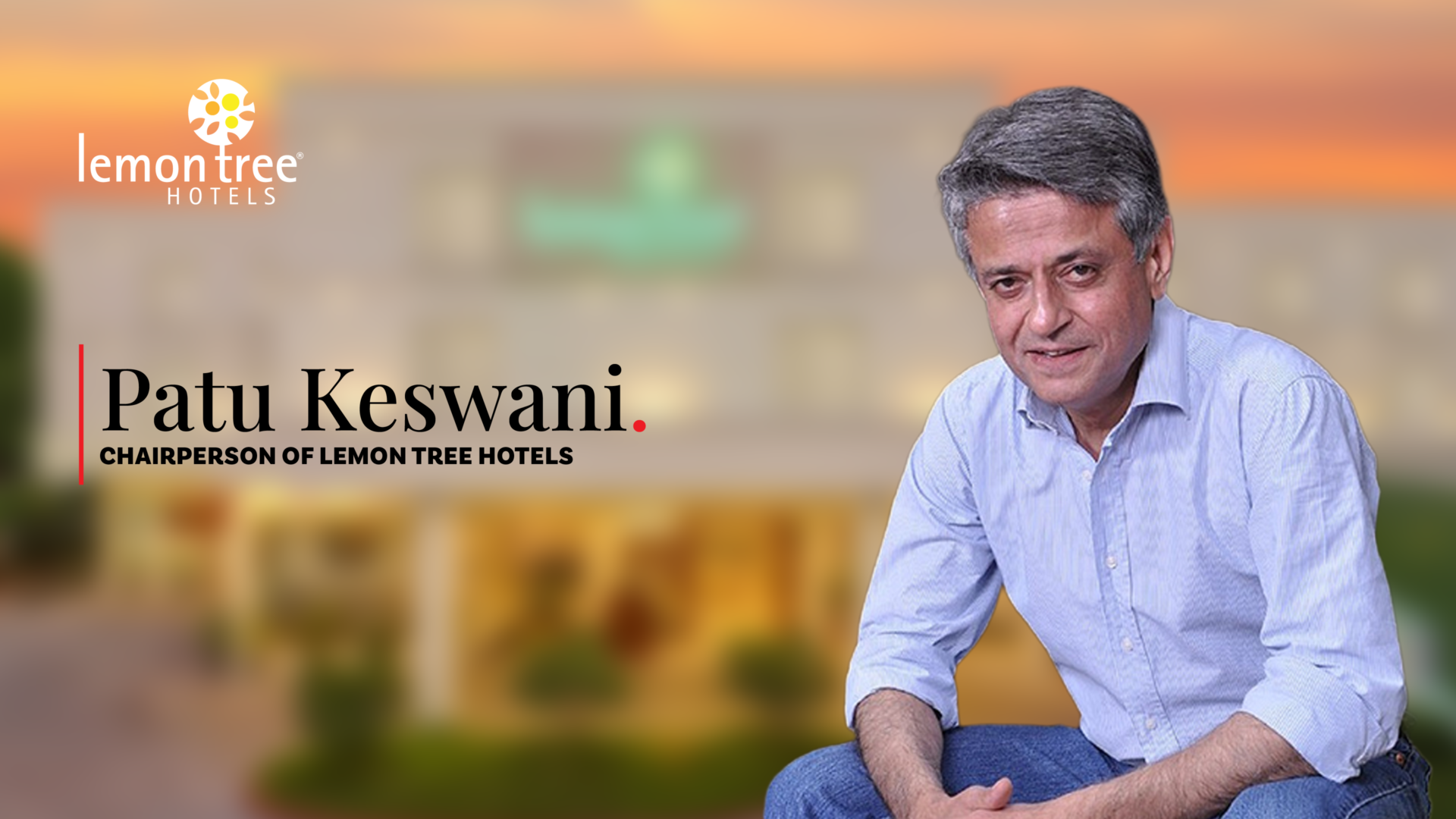
Lemon Tree Hotels: How One Founder Reimagined Mid-Market Hospitality in India with Profit and Purpose
At the dawn of the twenty-first century, as India’s economy accelerated into a new phase of liberalisation and global integration, the nation’s hospitality industry reflected a striking contradiction. Travellers arriving in the country’s rapidly expanding business centres encountered a market defined by extremes. At one end stood the established luxury properties of iconic hotel groups, grand establishments that offered refined service and opulent surroundings but charged rates that only corporate elites and affluent international visitors could comfortably afford. At the other end of the spectrum existed a sprawling network of low-cost lodges that were inexpensive yet frequently compromised on cleanliness, safety, and professional hospitality.
For the rising generation of Indian professionals, consultants, entrepreneurs, and middle-class families who were travelling more frequently than ever before, the choices were limited. They sought accommodation that delivered comfort, reliability, and dignity without the extravagant cost of five-star luxury, yet the market had largely ignored this segment.
It was precisely this overlooked opportunity that caught the attention of Patanjali “Patu” Keswani, a corporate executive who had spent years analysing industries and advising global companies. What began as a simple observation gradually evolved into a compelling entrepreneurial vision: to build a hospitality brand that would offer the essential experience of a premium hotel while remaining accessible to India’s expanding middle class.
From Academic Discipline to Corporate Leadership
Born in 1959 into a middle-class Indian household that placed deep emphasis on education and perseverance, Keswani grew up with a belief that intellectual discipline could transform opportunity. His academic journey followed one of the most demanding routes in India’s higher education landscape.
He first studied electrical engineering at the Indian Institute of Technology Delhi, an institution renowned for producing some of the country’s most analytically rigorous minds. Determined to broaden his perspective on business and management, he later pursued an MBA at the Indian Institute of Management Calcutta, where he developed a deeper understanding of markets, strategy, and organisational leadership.
Upon graduating in 1983, Keswani joined the prestigious Tata Administrative Services, the elite leadership cadre of the Tata Group, where promising young professionals were groomed to lead businesses within one of India’s most respected corporate institutions. Over the next seventeen years, he held strategic roles across several Tata companies, including a significant tenure at Taj Hotels, where he eventually rose to the position of Senior Vice President.
This experience proved formative, providing him with deep exposure to the operational intricacies of hospitality and the philosophy of service excellence that defines successful hotel brands.
Walking Away from Corporate Comfort
By the late 1990s, Keswani had moved into global consulting, joining the international strategy firm A.T. Kearney. His work involved advising large organisations across industries, travelling internationally, and enjoying the financial and professional rewards of a successful corporate career.
Yet despite the outward success, he found himself increasingly drawn toward a different ambition. After nearly two decades of corporate leadership, Keswani began to question whether continuing along the conventional path of professional advancement would bring the deeper satisfaction of creating something original.
At the age of thirty-nine, he made a decision that would redefine his career. Choosing to step away from a highly paid consulting role, he decided to build a company of his own, one that would address a gap he believed the hospitality industry had overlooked for far too long.
In 2002, he founded Lemon Tree Hotels in Gurugram with a clear and focused idea: deliver approximately sixty percent of the experience of a five-star hotel at roughly thirty percent of the cost.
Building the First Lemon Tree Hotel
Turning that vision into reality, however, was far from simple. In its earliest stages, Lemon Tree was built largely through Keswani’s personal savings and support from friends and acquaintances, at a time when investors were uncertain about the viability of a structured mid-market hotel chain in India.
The company’s first property, a modest forty-nine-room hotel in Gurugram, opened its doors in May 2004. For Keswani, that moment represented the real test of a concept that until then had existed largely as a strategic hypothesis.
The results were immediate and encouraging. Guests appreciated the thoughtful design, reliable service, and fair pricing that characterised the hotel. Occupancy levels were strong from the very beginning, validating the belief that India’s emerging middle class was ready for a new category of hospitality.
This early success attracted investor confidence, and in 2006 the global private equity firm Warburg Pincus invested significantly in Lemon Tree Hotels, enabling the company to expand its footprint across India.
Scaling a Multi-Brand Hospitality Platform
Over the following years, Lemon Tree Hotels evolved into one of India’s most dynamic hospitality companies. Its expansion strategy combined operational efficiency with a carefully designed brand architecture that allowed the company to serve multiple traveller segments.
The group introduced Red Fox Hotels to cater to value-conscious travellers seeking efficient and affordable accommodation, while Aurika Hotels & Resorts represented the company’s entry into the premium luxury segment.
By 2018, Lemon Tree Hotels had grown sufficiently to launch a successful public offering on Indian stock exchanges, followed by the strategic acquisition of Keys Hotels in 2019, which further expanded its national presence.
Today the company operates more than one hundred hotels across over sixty cities, serving millions of guests each year and firmly establishing itself as one of India’s largest and most influential mid-market hospitality brands.
The Moment That Redefined the Company’s Purpose
While Lemon Tree’s commercial growth is remarkable, the company’s defining identity emerged from a moment that reshaped its founder’s understanding of leadership.
In the early years of the company, Keswani decided to hire a few hearing-impaired employees for steward roles within one of the hotels. Initially the initiative was small, but its impact proved profound.
One day the mother of one of those employees visited the hotel to thank him personally. She explained that the job had transformed her son’s life, allowing him to gain independence and dignity in ways the family had never imagined.
For Keswani, the encounter became a turning point. What had begun as a small act of inclusion gradually evolved into a core philosophy of the company.
Today, a significant percentage of Lemon Tree’s workforce comes from disadvantaged backgrounds, including individuals with disabilities, orphans, and people who previously struggled to find meaningful employment. The company has received national recognition, including awards for being among India’s leading employers of persons with disabilities.
Leadership, Purpose, and the Future of Lemon Tree
After more than two decades of leadership as the company’s driving force, Keswani now serves as Executive Chairman, guiding the long-term vision of the organisation while empowering a new generation of leaders to oversee its daily operations.
Beyond Lemon Tree itself, he has also contributed to national initiatives focused on skill development and inclusion, serving in leadership roles connected to disability employment and education policy.
Looking ahead, the company continues to expand into India’s rapidly growing tier-two and tier-three cities while increasingly adopting asset-light management models that allow faster growth without heavy capital investment.
Yet for Keswani, the true legacy of Lemon Tree Hotels lies not simply in its scale or financial value. The company represents the belief that businesses can be both commercially successful and socially responsible.
In a hospitality industry traditionally associated with luxury and exclusivity, Lemon Tree stands as a powerful reminder that dignity, opportunity, and purpose can be built into the very architecture of enterprise.
And in the journey of India’s modern hospitality sector, the story of Patu Keswani remains a testament to what can happen when one founder chooses to leave comfort behind in order to build something that serves both the market and society with equal conviction.