

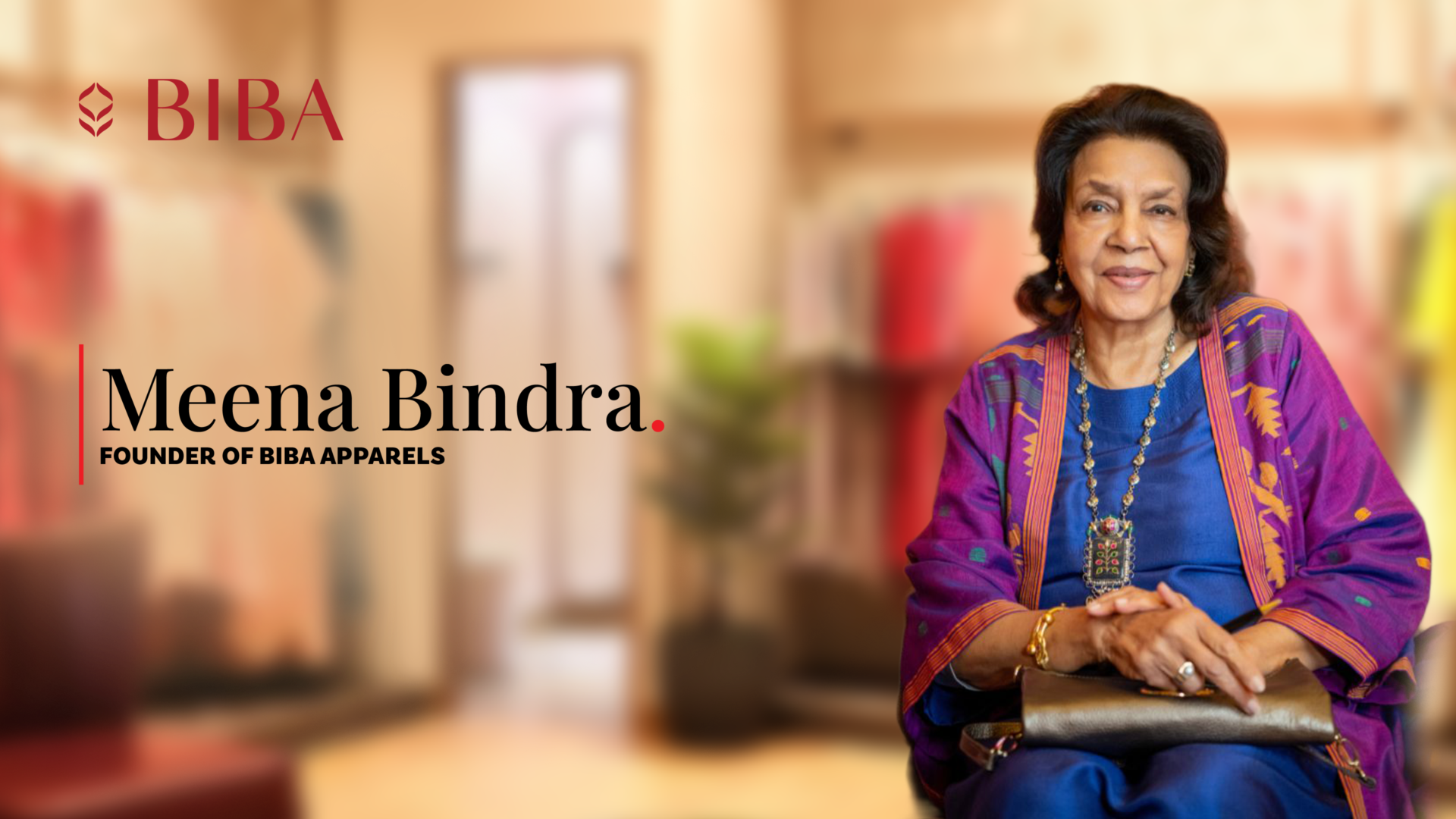
Every enduring enterprise begins with a moment of observation, and the story of Meena Bindra demonstrates how powerful business ideas often arise from everyday inconveniences rather than grand strategic visions. In India during the 1980s, buying a salwar-kameez required patience; women typically purchased fabric from markets, searched for tailors, waited weeks for stitching, and frequently received garments that did not match expectations.
Bindra, who had always appreciated fabrics, colours, and traditional prints, began questioning why Indian women could not enjoy the convenience of Western ready-to-wear clothing. If dresses and trousers could be purchased instantly, why should ethnic wear remain dependent on tailoring?
That question planted the seed for what would become Biba, a name derived from a Punjabi word referring to a graceful young woman. What began as a small experiment would eventually transform into one of India’s most recognisable ethnic fashion labels.
Early Life of Meena Bindra
Long before she entered the fashion industry, Meena Bindra’s life reflected the expectations placed upon many women of her generation. She studied at Miranda House within University of Delhi, yet her professional ambitions soon took a secondary role after she married a Naval officer and embraced a life shaped by family responsibilities and frequent relocations.
For nearly twenty years, Bindra focused on raising her two sons and managing a household that adapted continuously to naval postings. Entrepreneurship was never a defined goal; she embraced the role of homemaker with dedication.
Life changed when her sons left for boarding school, leaving her with time and creative energy. Rather than allowing this phase to feel empty, she began exploring ways to remain engaged and productive.
The Beginning of Biba: Starting a Fashion Venture from Home with ₹8,000
In 1988, with encouragement from her husband and a modest bank loan of ₹8,000, Bindra began designing salwar-kameez sets from her home in Delhi. Working with local tailors, she experimented with vibrant block prints, comfortable silhouettes, and elegant colour combinations.
Her earliest customers were women within her social circle, particularly naval wives who appreciated the convenience of buying ready-to-wear ethnic garments without tailoring delays. The first batch sold quickly, and word-of-mouth recommendations soon brought new customers.
At that stage, there was no formal brand identity. Customers simply referred to the garments as “Mrs Bindra’s suits,” yet the enthusiasm surrounding those designs revealed something important: Indian women were ready for a more convenient approach to traditional clothing.
The Hardest Phase of Building Biba
Despite early demand, building a business was not easy. In the late 1980s, ready-to-wear ethnic fashion was still unfamiliar within India’s retail landscape, and many retailers questioned whether pre-stitched salwar suits could become a sustainable model.
Bindra also faced subtle social resistance. As the wife of a Naval officer, some believed she should simply enjoy that life rather than pursue entrepreneurship, and she was occasionally advised to abandon the venture before it demanded too much time.
Operational challenges added pressure. Managing tailors, sourcing fabrics, maintaining quality, and balancing family responsibilities required patience and constant learning. Production delays or supply issues occasionally forced her to rethink processes and build stronger systems.
Yet customer loyalty kept her moving forward. Women who bought her garments returned repeatedly, reinforcing her belief that she was solving a genuine problem.
When Biba Transitioned from Supplier Brand to Retail Fashion Label
A defining turning point in Biba’s evolution arrived in the late 1990s when Bindra’s younger son, Siddharth Bindra, joined the business and introduced a new strategic perspective.
Until then, Biba operated primarily as a supplier brand, selling garments through boutiques and department stores such as Shoppers Stop and Pantaloons. While this model allowed steady growth, the brand’s relationship with customers remained indirect.
Siddharth believed Biba needed its own retail presence. Launching exclusive brand stores was ambitious at a time when organised ethnic fashion retail in India was still emerging, yet the family decided to take the leap.
In 2004, Biba opened its first exclusive brand outlet in Mumbai. Customers could now experience the brand directly, exploring collections and purchasing complete outfits without the tailoring process.
This decision marked the transformation of Biba from a supplier business into a national fashion brand.
Expanding into One of India’s Leading Ethnic Wear Brands
Following the success of its retail expansion, Biba began establishing stores across malls and high streets throughout India. The brand became known for vibrant prints, versatile silhouettes, and contemporary interpretations of traditional Indian clothing.
Over time, the company expanded into children’s wear, accessories, and the value-fashion label Rangriti, which allowed it to reach younger consumers and emerging markets across India. Designer collaborations further strengthened Biba’s credibility within the fashion industry.
From its modest beginnings in a Delhi home, Biba gradually expanded into a nationwide network of stores serving customers across generations.
Leadership Philosophy of Meena Bindra: Values That Shaped the Biba Brand
As the organisation grew, Bindra’s leadership style evolved from hands-on supervision to collaborative guidance. In the early years, she personally selected fabrics, oversaw stitching, and interacted closely with customers. Over time, she entrusted operational responsibilities to professional teams while continuing to guide the brand’s creative philosophy.
Three enduring principles continue to shape her leadership: respect for Indian heritage, empathy for the modern Indian woman, and unwavering commitment to quality.
As she often reflects, “Entrepreneurship does not always begin with ambition; sometimes it begins with noticing a small problem and deciding to solve it.”
Impact Beyond Business: Inspiring Women Entrepreneurs in India
While Biba’s commercial success is significant, Bindra often emphasises the deeper meaning of her journey. When she began her venture, organised ready-to-wear ethnic fashion barely existed in India; today it represents a thriving segment of the country’s apparel industry.
Her story also challenges the idea that entrepreneurship must begin early in life. Bindra launched her venture at nearly forty years of age without formal training in fashion or business.
Her journey demonstrates that curiosity, persistence, and experience can be just as powerful as youthful ambition.
The Person Behind the Founder
Despite decades of professional achievement, Bindra remains closely connected to the creative instincts that first inspired her journey. Fabrics, colours, and India’s textile traditions continue to influence her design philosophy.
Family has also been central to her life and business. The encouragement of her husband and the involvement of her sons in the company created the foundation upon which Biba grew.
For Bindra, fashion is not merely about garments but about helping women feel confident and comfortable in their cultural identity.
Legacy and the Future of Biba
In 2024, Bindra documented her journey in her memoir A Stitch in Time: The Biba Story, reflecting on the lessons learned while building a brand that began with a simple observation.
Looking ahead, her vision remains focused on preserving the richness of Indian cultural aesthetics while evolving with younger generations. Fashion, in her view, reflects identity, heritage, and individuality.
From a modest home experiment funded by ₹8,000 to a brand that dresses millions of Indian women, Meena Bindra’s journey demonstrates that enduring businesses are rarely built overnight but stitched patiently through observation, resilience, and belief in a simple idea.