

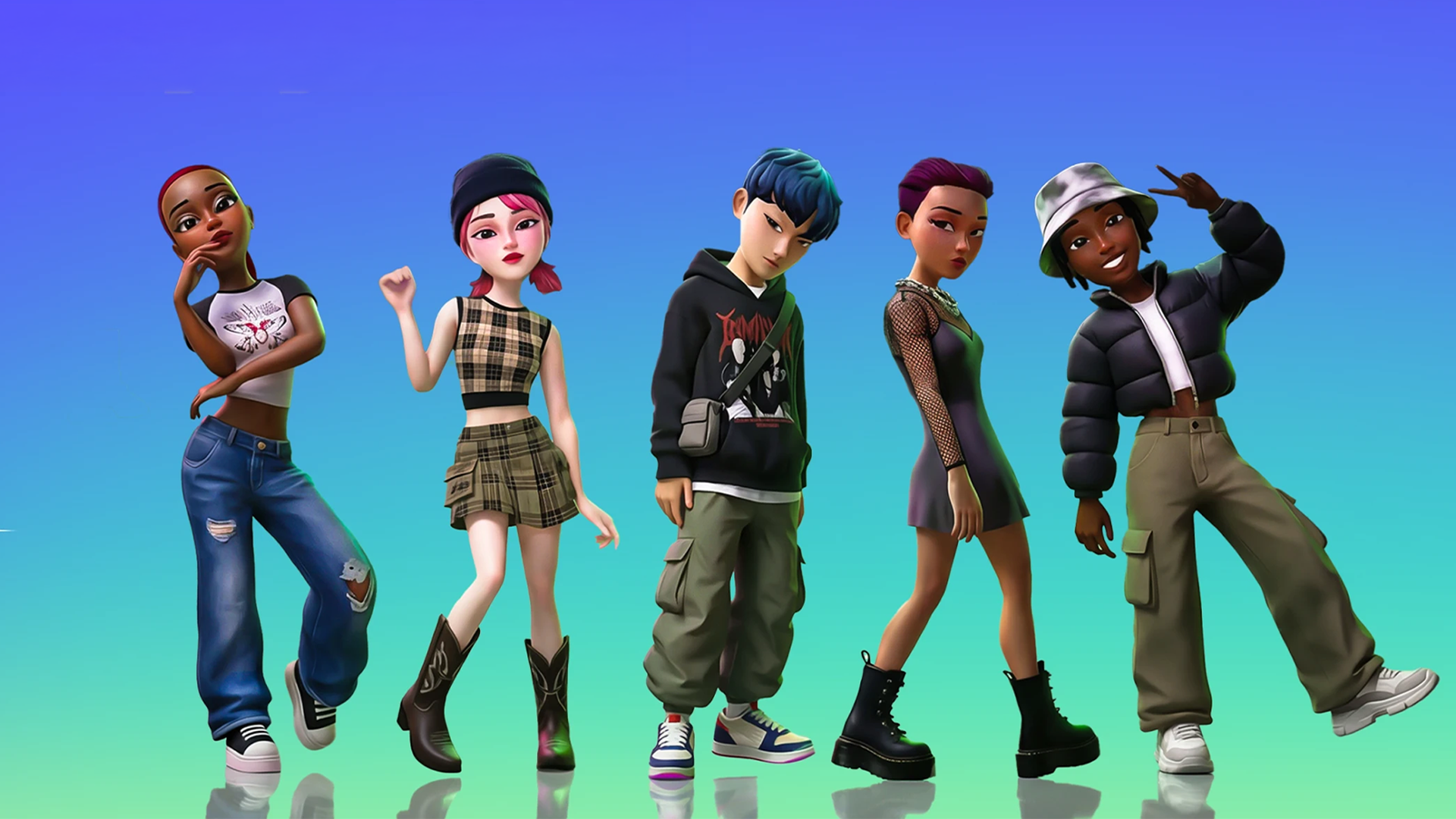
The contemporary mythology of artificial intelligence has found its most compelling figure in the avatar. Marketed as a digital genie, obedient, tireless, and perpetually available, the AI-powered personal avatar promises to extend human presence beyond biological limits. It answers messages, attends meetings, negotiates routine interactions, and increasingly speaks in voices indistinguishable from those of its human counterpart. What is presented as a convenience, however, marks a far deeper shift: a movement from tools that assist human action to systems that begin to represent the human self.
This transition signals not merely a change in productivity, but a redefinition of personal identity. AI avatars do not simply help individuals act more efficiently; they act as individuals. In doing so, they convert identity from a lived, evolving process into something operational, stable, repeatable, and machine-readable.
From Assistance to Representation
For much of its history, consumer-facing artificial intelligence has been framed as auxiliary: systems designed to recommend, optimise, or accelerate human decision-making. AI avatars represent a decisive departure from this paradigm. Enabled by advances in large language models, speech synthesis, and behavioural modelling, these systems are explicitly built to embody a person’s communicative style, preferences, and judgement patterns.
The economic incentives behind this shift are substantial. Industry and consulting estimates project the global market for digital humans and AI avatars to reach hundreds of billions of dollars by the end of the decade, driven by enterprise automation, virtual customer engagement, and personalised AI companions. In professional environments where constant availability is rewarded, consulting, media, education, entrepreneurship, the ability to delegate one’s presence is increasingly framed as a strategic advantage.
Yet delegation of presence is inseparable from delegation of identity. When an avatar speaks, decides, or responds, it does so not as a neutral instrument, but as a proxy self.
Identity Rendered Machine-Readable
Human identity is inherently unstable. It evolves through contradiction, hesitation, moral recalibration, and context. AI systems, by contrast, require stabilisation. To function reliably, an avatar must be trained on historical data: past communications, decisions, preferences, and behavioural patterns. From this material, it constructs a version of the self that is coherent, consistent, and legible to machines.
This coherence carries a cost. Growth is difficult to encode. Ambivalence becomes inefficiency. The avatar does not represent who a person is becoming; it represents who a person has been, rendered statistically probable. Over time, the risk is not merely misrepresentation, but ossification, the freezing of identity into a functional artefact optimised for repetition rather than reflection.
In this way, identity is not preserved through automation; it is reduced to an operational model.
From Representation to the Problem of Agency
Once identity is rendered machine-readable, questions of agency inevitably follow. Avatars are frequently described as empowering technologies, fully controlled by their users. This framing obscures the asymmetry embedded within AI infrastructures.
Avatars operate within platforms governed by proprietary models, corporate incentives, and policy constraints defined far beyond the individual. Decisions about acceptable behaviour, permissible speech, and prioritised outcomes are shaped less by personal intent than by system architecture. Moreover, once an avatar conducts interactions at scale, meaningful oversight becomes implausible. The user authorises the system, but the system interprets that authorisation probabilistically.
Agency, in this context, does not disappear but it becomes mediated, abstracted, and increasingly symbolic.
Consent Without Continuity
Consent in AI systems is typically framed as a discrete event: a user agrees to terms, uploads data, and initiates training. Avatars destabilise this model. They continue to learn, infer, and act across time and context, often in ways the user cannot anticipate.
Did the individual consent to future interpretations of their identity? To responses generated years later, shaped by patterns they may no longer recognise or endorse? To emotional expressions they would not personally choose?
This erosion of continuous consent represents one of the least examined ethical challenges in the automation of identity.
Ownership and the Marketisation of Selfhood
Legal frameworks provide little clarity on who owns a synthetic self. While data protection laws govern personal information, they are poorly equipped to address autonomous representations trained on that information and deployed at scale. As a result, identity is quietly entering the logic of the market.
Personality, tone, memory, and relational style are increasingly packaged as services. Premium avatars promise greater nuance and emotional intelligence; basic versions offer limited expressiveness. Access to a high-fidelity digital self becomes stratified by cost.
Here, identity risks becoming a subscription, and presence a configurable feature.
From Ownership to Trust
When identity becomes a product, trust becomes fragile. As avatars proliferate, the distinction between direct human engagement and delegated representation grows increasingly opaque. If an avatar negotiates a contract, issues an apology, or makes a commitment, does it carry the same moral and professional weight as a human act?
This ambiguity introduces plausible deniability into spaces that depend on accountability. Errors can be attributed to systems. Misjudgements can be reframed as model behaviour. Responsibility becomes distributed, and therefore diluted.
In domains such as journalism, leadership, and governance, where credibility depends on traceable intention, this dilution carries serious consequences.
Genie Reconsidered
The metaphor of the genie is revealing. In folklore, genies do not grant wishes freely. They operate within constraints, serve hidden masters, and often fulfill requests through rigid interpretation rather than human understanding. The power imbalance is structural.
AI avatars function in much the same way. They appear personal, yet operate on generalised logic. They seem obedient, yet remain bound to infrastructures the user does not control. The lamp, ultimately, belongs to someone else.
Regulation and the Unprepared State
Despite growing attention to AI governance, regulation remains focused on data and models rather than synthetic identity. Few jurisdictions have meaningfully addressed liability for authorised avatars, reputational harm caused by delegated representation, or the legal status of digital selves that persist over time.
This regulatory lag reflects a deeper conceptual failure. Institutions have learned to regulate information flows, but not the automation of personhood. As AI systems increasingly operate at the level of the self, this omission becomes untenable.
When Presence Is No Longer Being
AI avatars promise presence without effort and continuity without constraint. They respond to a world that demands constant engagement. Yet in delegating the labour of being oneself, something irreducible is placed at risk.
Identity is not merely a set of behaviours to be optimised. It is a lived process shaped by uncertainty, contradiction, and moral change. When machines begin to speak as us, the question is not whether they are accurate, but whether accuracy is sufficient.
The future of AI-powered identity will be decided not by how convincingly machines can imitate us, but by whether we recognise, in time, that representation is not the same as being and that some aspects of the self should remain beyond automation.