

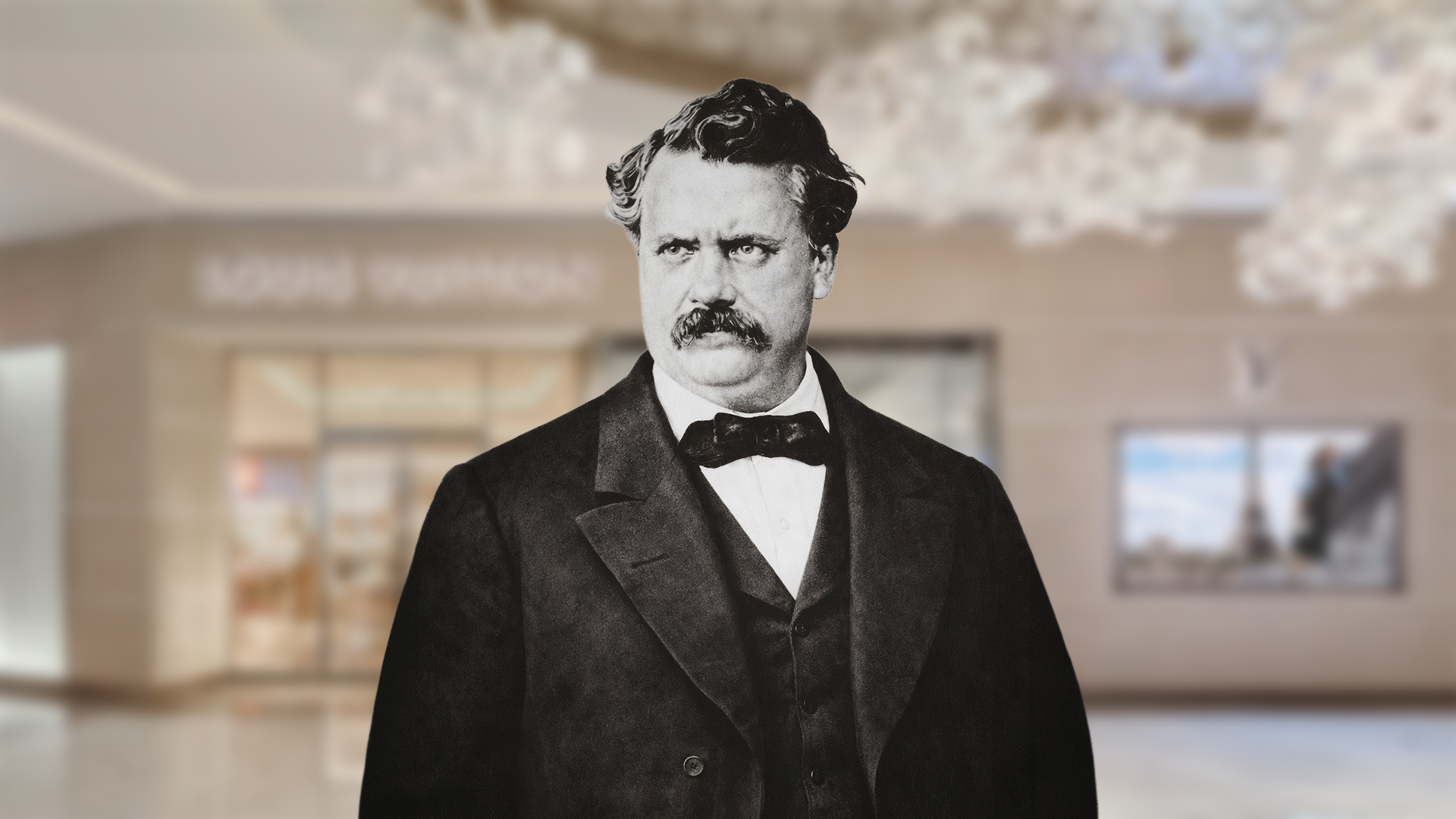
In the world of global luxury, few names carry the same enduring prestige as Louis Vuitton. The maison he founded, Louis Vuitton, has become one of the most influential houses in fashion history and a cornerstone of the global luxury conglomerate LVMH. Its iconic monogram canvas and meticulously crafted leather goods symbolize elegance, travel, and heritage.
Yet the story of this extraordinary brand begins far from the glamour of Parisian fashion houses. It begins with a determined boy from rural France whose ambition and craftsmanship would eventually reshape the culture of luxury travel.
A Village Childhood That Shaped a Future Visionary
Louis Vuitton was born on August 4, 1821, in the small village of Anchay in France’s Jura region. His father worked as a farmer and miller, while his mother was known locally for her skill as a hat maker. Through her work, Vuitton was introduced early to the patience and discipline required for craftsmanship.
When Vuitton was ten years old, his mother passed away, leaving a profound impact on his childhood. Family tensions and the limited opportunities of rural life soon pushed the young boy toward independence. At the age of thirteen, he made the remarkable decision to leave home and travel to Paris in search of opportunity.
The journey was long and demanding. Covering nearly 470 kilometers on foot, Vuitton supported himself along the way by taking small jobs and learning practical skills. By the time he reached Paris in 1837, the young traveler carried little more than determination and a willingness to learn.
Learning the Craft That Introduced Him to Travel
Soon after arriving in Paris, Vuitton secured an apprenticeship with Monsieur Romain Maréchal, a respected craftsman specializing in box-making and packing. During the nineteenth century, packing was an essential profession for wealthy households preparing for long journeys across Europe.
Within Maréchal’s workshop, Vuitton demonstrated exceptional attention to detail and discipline. Packing required more than simple organization; it demanded knowledge of materials and careful design to protect delicate garments and valuables during travel.
This period coincided with a major transformation in European mobility. Railways and steamships were expanding rapidly, enabling aristocrats and wealthy merchants to travel more frequently. However, the luggage used during this era had remained largely unchanged.
Traditional trunks featured rounded lids designed to shed rainwater during carriage travel. While useful in earlier times, the design proved inconvenient in the age of trains and ships, where luggage needed to be stacked efficiently.
A Vision That Redefined the Travel Trunk
During his years as a packer, Vuitton began to notice the limitations of traditional luggage. The curved-top trunk, long accepted as standard, made stacking difficult during railway and steamship journeys.
Recognizing this inefficiency, Vuitton envisioned an alternative: a flat-topped trunk constructed from lightweight yet durable materials. The design would allow trunks to be stacked easily while maintaining the strength necessary to protect their contents.
This simple yet revolutionary insight marked the turning point of his career. By reimagining the structure of luggage itself,
Vuitton laid the foundation for a transformation in luxury travel.
The Imperial Patron Who Changed His Fortune
Vuitton’s craftsmanship gradually attracted attention among Parisian elites. In 1853, his career reached a defining moment when he was appointed the personal trunk maker and packer to Empress Eugénie, the wife of Napoleon III.
Serving the Empress elevated Vuitton’s reputation instantly. His responsibility was to prepare and transport the imperial wardrobe with flawless precision during royal journeys. Through this role, his craftsmanship gained visibility among aristocrats and influential travelers throughout Europe.
The artisan who had once arrived in Paris as a young apprentice was now recognized as one of the most trusted trunk makers in elite society.
The Birth of a Maison That Defined Luxury Travel
In 1854, Vuitton opened his own workshop at 4 Rue Neuve des Capucines in Paris, marking the birth of the Maison Louis Vuitton.
Four years later, in 1858, he introduced the innovation that would change luggage design forever: the flat-topped travel trunk. Constructed from lightweight poplar wood and covered with waterproof Trianon canvas, the trunk was both durable and elegant. Unlike traditional designs, Vuitton’s trunks could be stacked easily during rail and sea travel, making them ideal for modern journeys.
The design quickly gained popularity among aristocrats and international travelers who valued both practicality and refined aesthetics.
Crafting an Iconic Identity
As Vuitton’s trunks became increasingly sought after, imitation products began appearing across Europe. In response, Vuitton introduced a distinctive striped canvas design in 1876 to distinguish authentic products.
This early effort to protect his craftsmanship laid the foundation for one of the most recognizable symbols in fashion. After Vuitton’s death in 1892, his son Georges Vuitton introduced the famous monogram canvas in 1896, featuring interlocking initials and floral motifs that remain iconic today.
From Workshop to Global Luxury Empire
Over time, Louis Vuitton evolved from a specialized luggage maker into a global luxury house producing handbags, accessories, and fashion collections. Its dedication to craftsmanship remained central even as the brand expanded internationally.
In 1987, Louis Vuitton became part of the newly formed LVMH group, created through the merger of Louis Vuitton with Moët Hennessy. Today LVMH stands as the largest luxury conglomerate in the world. Within this portfolio, Louis Vuitton remains one of the most valuable and influential luxury brands globally.
The Enduring Legacy of a Visionary Craftsman
Louis Vuitton passed away in 1892 at the age of seventy, leaving behind more than a successful business. He left a philosophy rooted in craftsmanship, innovation, and thoughtful design.
From a determined boy who walked hundreds of kilometers to Paris to the founder of one of the most celebrated luxury houses in history, Vuitton’s journey remains one of the most remarkable entrepreneurial stories in the world of luxury.
His legacy reminds us that true luxury is not defined merely by objects, but by vision, dedication, and the courage to transform a simple idea into something timeless.
