

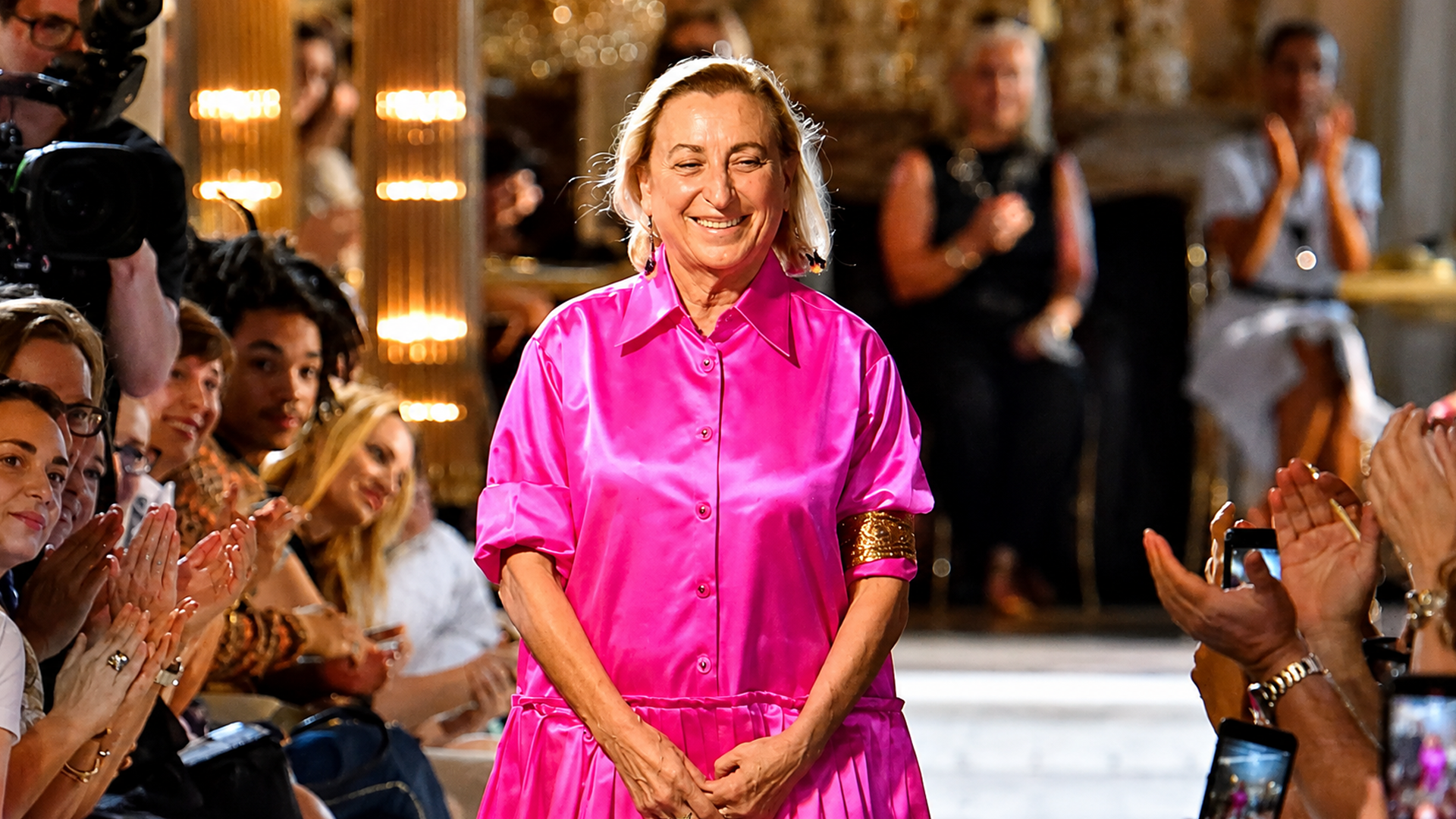
Luxury has long been built upon the language of desire. For generations, the world’s most prestigious brands competed through rarity, craftsmanship, and visible status. Yet few leaders have transformed the meaning of luxury itself as profoundly as Miuccia Prada. Over four decades, she reshaped a respected Italian family business into one of the most influential luxury groups in the world, challenging accepted notions of beauty, aspiration, and consumer culture along the way.
What distinguishes Prada is not merely the scale of the enterprise she helped build, but the philosophy behind it. While many luxury houses sought to perfect glamour, Prada questioned it. While others focused on what consumers desired, she became interested in why they desired it. In doing so, she introduced a new vision of luxury one rooted not merely in aesthetics, but in intellect, contradiction, and cultural inquiry.
It is the story of a woman who transformed luxury from a symbol of wealth into a platform for ideas.
Early Life and the Intellectual Foundations of Leadership
Born Maria Bianchi in Milan in 1949 and later adopting the Prada surname through her family lineage, Miuccia Prada inherited a connection to one of Italy’s most established luxury businesses. Yet little in her early life suggested she would become one of fashion’s defining figures.
She earned a doctorate in political science from the University of Milan and became deeply engaged with philosophy, social theory, and contemporary politics. During the feminist movements of the 1970s, she participated in progressive intellectual circles, developing perspectives that would later shape her approach to leadership and creativity. She also trained as a mime artist at Milan’s Piccolo Teatro, cultivating a fascination with performance and human behaviour.
Perhaps the most compelling contradiction of her career is that one of luxury’s most influential leaders emerged from a background shaped by political idealism and intellectual scepticism. That tension would remain central to her worldview and later shape the industry she transformed.
Rebuilding Prada Through Vision and Partnership
When Prada joined the family business in the late 1970s, the company was respected for its craftsmanship but lacked significant international influence. Founded in 1913 by her grandfather Mario Prada, it possessed heritage and quality, yet its future direction remained uncertain.
A transformative chapter began with Patrizio Bertelli, the entrepreneur who would become both her husband and business partner. Their collaboration evolved into one of the most successful partnerships in modern luxury. While Prada developed the creative vision that distinguished the brand, Bertelli built the operational and commercial framework required for international expansion.
Together, they demonstrated that enduring businesses emerge when creative imagination is matched by strategic discipline. It was this balance that enabled Prada to evolve from a family-run enterprise into a global luxury powerhouse.
The Nylon Revolution That Redefined Modern Luxury
Every transformative founder story contains a defining moment, and for Miuccia Prada that moment arrived in 1984.
In an industry obsessed with exotic leathers and conspicuous displays of wealth, Prada introduced a simple black backpack crafted from industrial nylon. To many observers, the idea seemed entirely counterintuitive. Luxury was not supposed to resemble utility.
Yet Prada recognised a cultural shift that others overlooked. A new generation increasingly valued subtlety over spectacle. The now-iconic nylon backpack became a cultural phenomenon, embraced by those who viewed luxury not as a performance of wealth but as an expression of taste.
Its significance extended beyond commercial success. By transforming an industrial material into an object of desire, Prada challenged traditional assumptions about value itself. The backpack introduced a new luxury language that still influences the industry today.
How Miuccia Prada Made Luxury an Intellectual Conversation
If the nylon revolution established Prada’s commercial distinctiveness, her broader creative philosophy secured her place in cultural history.
Throughout the 1990s and early 2000s, she consistently challenged conventional definitions of beauty. Rather than pursuing predictable glamour, she embraced complexity, contradiction, and what critics famously described as “ugly chic”. Her collections featured unexpected colours, unconventional silhouettes, and designs that often provoked discussion before admiration.
Where many designers created garments, Prada created questions.
Her work explored themes such as identity, gender, power, and consumer culture. Clothing became a means of cultural examination rather than mere decoration.
This approach fundamentally altered the relationship between luxury brands and their audiences. Consumers were invited to engage with ideas. Prada did not follow cultural shifts; she anticipated them.
Prada evolved into a cultural institution influencing art, media, and academia.
Building a Global Luxury Group Through Innovation
While Prada’s intellectual influence attracted critical acclaim, her achievements as a business builder were equally significant.
Under the leadership of Prada and Bertelli, Prada Group expanded into one of the world’s most influential luxury organisations, operating across major international markets and generating billions of euros in annual revenue. Its portfolio expanded beyond the flagship brand into multiple luxury categories.
Among its most significant achievements was Miu Miu, launched in 1993 and named after Prada’s childhood nickname. Conceived as a younger and more experimental counterpart to Prada, it evolved into a powerful luxury brand in its own right, demonstrating her ability not only to reinvent an existing company but also to create entirely new avenues of growth.
Prada achieved global scale without sacrificing originality. While many competitors pursued short-term trends, the company remained committed to creative independence, long-term brand equity, and cultural relevance.
Beyond Fashion: Creating Cultural Capital
Perhaps the clearest expression of Prada’s worldview exists beyond commerce.
Through Fondazione Prada, established alongside Patrizio Bertelli, she created one of Europe’s most respected cultural institutions, supporting contemporary art, architecture, cinema, and research. The foundation reflects her belief that creativity flourishes when different disciplines engage with one another.
Rather than viewing fashion as a self-contained industry, Prada positioned it within a broader cultural ecosystem. Her commitment to intellectual dialogue demonstrates that her ambitions were never limited to building a successful luxury brand.
Even her decision in 2020 to share creative leadership with Raf Simons reflected this philosophy, reinforcing her belief that innovation emerges through collaboration rather than certainty.
A Legacy That Changed the Meaning of Luxury
Miuccia Prada’s significance cannot be measured solely through revenue, market value, or runway acclaim. Her true contribution lies in the intellectual framework she introduced to modern luxury. She demonstrated that elegance need not be superficial, that profitability need not come at the expense of originality, and that commerce can coexist with cultural influence.
Today, countless luxury brands position themselves as cultural storytellers rather than simply product makers. In many ways, that shift reflects the model Prada pioneered decades ago.
In transforming a family business into a global cultural force, she altered how the industry understands creativity, leadership, and relevance. Long after individual collections fade, her ideas continue to shape luxury.
In an industry built upon desire, Miuccia Prada achieved something far rarer than commercial success. She taught luxury to think.
