

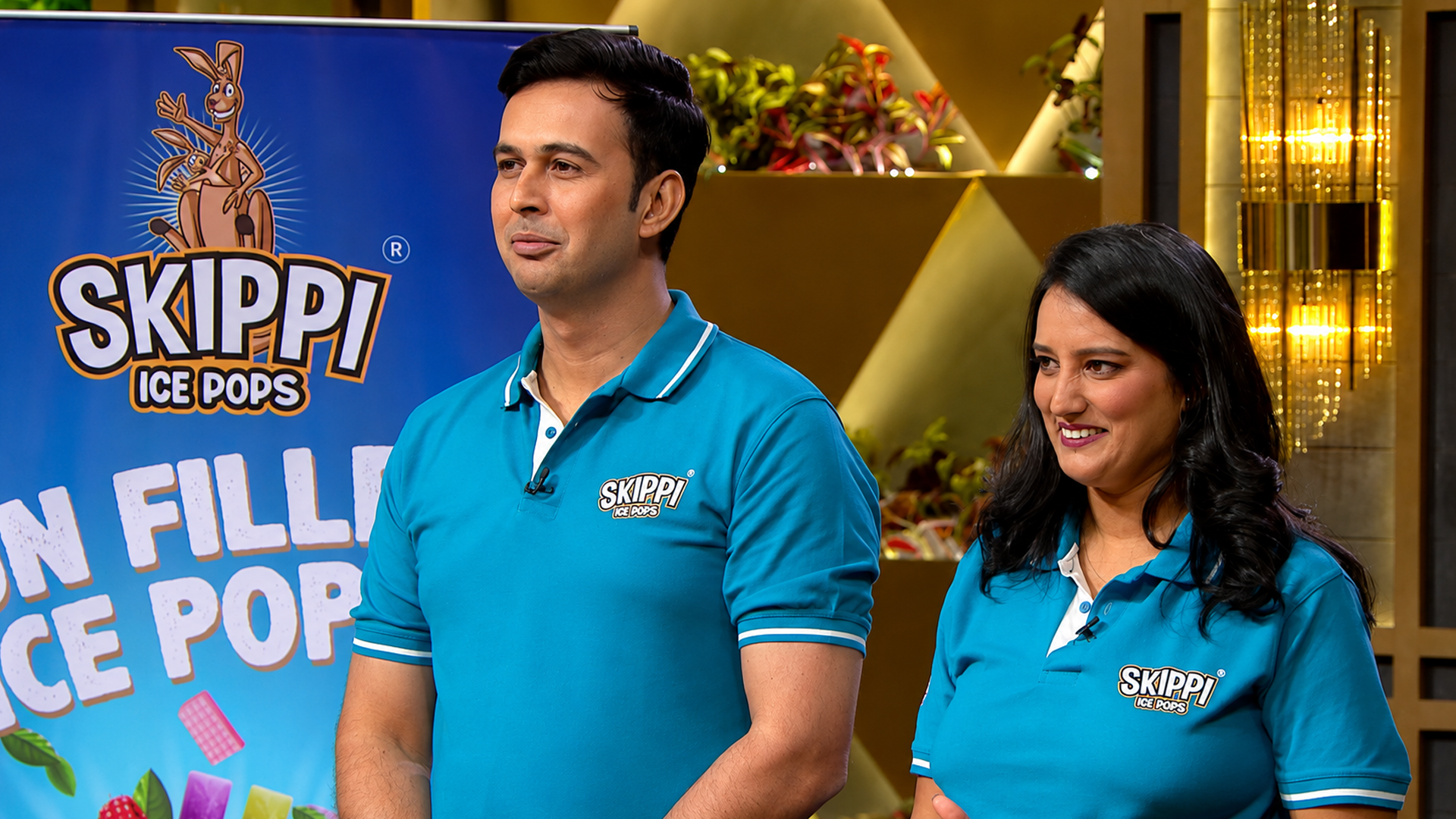
Ravi Kabra and Anuja Kabra are the founders of Skippi Ice Pops, India’s first branded ice-pop company. By transforming a simple childhood favourite into a trusted consumer brand, they demonstrated how an overlooked everyday product could become a scalable FMCG business.
Their journey is important because it proves that successful entrepreneurship does not always require creating an entirely new category. Sometimes, the greatest opportunities emerge from improving products that consumers already know, trust and enjoy.
What Market Gap Did Skippi Ice Pops Identify?
Skippi identified a significant gap within India’s frozen treats market. While ice candies and ice pops were deeply embedded in Indian summers, the category remained largely unorganised, with inconsistent quality, packaging and manufacturing standards.
Ravi’s exposure to international consumer markets highlighted the contrast. In many countries, even low-cost products adhered to strict quality controls, whereas India’s popular ice-pop category lacked a trusted national brand. Ravi and Anuja recognised an opportunity to combine childhood nostalgia with modern expectations of hygiene, safety and consistency.
Their vision was simple: create packaged ice pops that retained the joy of traditional ice candies while offering consumers greater confidence in the product.
How Did the Idea for Skippi Ice Pops Begin?
The idea emerged from a simple observation rather than extensive market research. The founders realised that while India had millions of ice-candy consumers, it lacked a recognised national brand in the category.
Drawing upon their experience in the food and beverage industry, Ravi and Anuja saw potential where others saw an ordinary product. Instead of creating a new consumer behaviour, they focused on improving an existing one.
This approach allowed them to build upon a product that already enjoyed widespread popularity while addressing long-standing concerns surrounding trust and quality.
What Challenges Did Skippi Face Before Growth?
Building a branded business within an unorganised category was far from easy. The company faced challenges ranging from consumer trust issues and limited brand awareness to distribution bottlenecks and retail expansion difficulties.
The COVID-19 pandemic created additional operational hurdles, disrupting manufacturing, logistics and market expansion efforts. Convincing retailers and consumers that a branded ice pop could command attention within a traditionally low-cost category also required considerable persistence.
Despite these obstacles, the founders remained focused on refining their product and strengthening their business foundations.
How Did Shark Tank India Change Skippi’s Growth Trajectory?
Shark Tank India proved to be the defining moment in Skippi’s growth journey.
When Ravi and Anuja presented their business on the show, they secured a rare all-shark deal, becoming the first startup to receive investment from all the sharks. The company raised ₹1 crore for 15 per cent equity, gaining not only funding but also national visibility.
The exposure dramatically increased consumer awareness, strengthened retailer confidence and accelerated expansion efforts. What had once been a promising startup quickly became a recognised brand across India.
What Growth Metrics Demonstrate Skippi’s Success?
Skippi’s post-Shark Tank growth highlights the power of combining visibility with execution.
The company reported significant revenue growth, with monthly sales crossing ₹2 crore after gaining national attention. It expanded across more than 25 states and built a distribution network comprising over 200 distributors and super stockists.
Today, the brand is available through more than 10,000 retail touchpoints, demonstrating how effective branding and operational readiness can transform a simple product into a national business.
What Makes Skippi Different From Traditional Ice Candies?
Skippi differentiated itself by focusing on quality, consistency and consumer trust.
Unlike traditional ice candies that often varied in ingredients and manufacturing standards, Skippi introduced a standardised product manufactured under controlled conditions. The company positioned itself as a modern, hygienic alternative while preserving the nostalgic appeal that made ice pops popular in the first place.
This balance between familiarity and reliability helped the brand stand apart in a fragmented market.
Key Differentiators
Several factors contributed to Skippi’s success:
●Hygienic and standardised manufacturing
●Use of quality ingredients and RO water
●Consistent packaging and branding
●Child-friendly product positioning
●Strong focus on consumer trust
●Nationwide distribution network
●Modern FMCG approach to a traditional category
These differentiators helped transform a low-cost snack into a recognised consumer brand.
How Did Distribution Become a Competitive Advantage?
Distribution became one of Skippi’s strongest growth drivers.
The founders understood that awareness alone would not create a successful FMCG business. As demand increased, they invested heavily in building a reliable network of distributors, retailers and stockists capable of supporting national expansion.
This ensured that growing consumer interest translated into actual product availability across markets.
Distribution Expansion Strategy
Skippi adopted a multi-channel distribution strategy that included:
●Retail outlets
●Schools
●E-commerce platforms
●Regional distributors
●Super stockists
●Franchise and freezer-bike initiatives
This diversified approach reduced dependence on a single sales channel and strengthened the brand’s nationwide reach.
What Business Lessons Can Entrepreneurs Learn From Skippi?
The Skippi story offers several valuable lessons. Nostalgia can become a powerful business asset when paired with modern execution. Innovation does not always require inventing a new product; improving an existing one can be equally impactful.
The journey also highlights the importance of distribution, consumer trust and operational discipline. While visibility can create opportunities, sustainable growth ultimately depends upon execution.
What Is Skippi’s Broader Impact on India’s FMCG Startup Ecosystem?
Skippi demonstrated that high-growth businesses can emerge from traditional consumer categories. The company challenged the assumption that only technology-driven startups attract investor interest and scale rapidly.
Its success has become a case study in FMCG innovation, consumer branding, nostalgia marketing and distribution-led growth. More importantly, it showed that even simple products can become national brands when supported by strong execution.
Conclusion
Ravi and Anuja Kabra built Skippi Ice Pops by recognising an opportunity hidden within one of India’s most familiar childhood memories. Through quality-focused manufacturing, strategic branding and disciplined distribution, they transformed a simple frozen treat into a nationally recognised consumer brand.
Their journey proves that entrepreneurship is not always about creating something entirely new. Sometimes, the most significant opportunities emerge from improving products that people already love and trust.
Frequently Asked Questions (FAQs)
Who are the founders of Skippi Ice Pops?
Skippi Ice Pops was founded by Ravi Kabra and Anuja Kabra.
How much funding did Skippi receive on Shark Tank India?
The company secured ₹1 crore for 15 percent equity through an all-shark deal.
What makes Skippi different from traditional ice candies?
Skippi focuses on hygienic manufacturing, quality ingredients, standardised packaging and nationwide distribution.
How large is Skippi’s distribution network?
The company has expanded across more than 25 states with over 10,000 retail touchpoints and a network of more than 200 distributors and super stockists.
What is the biggest lesson from Skippi’s success story?
The biggest lesson is that strong branding, consumer trust and effective distribution can transform even a simple, low-cost product into a scalable business.
