

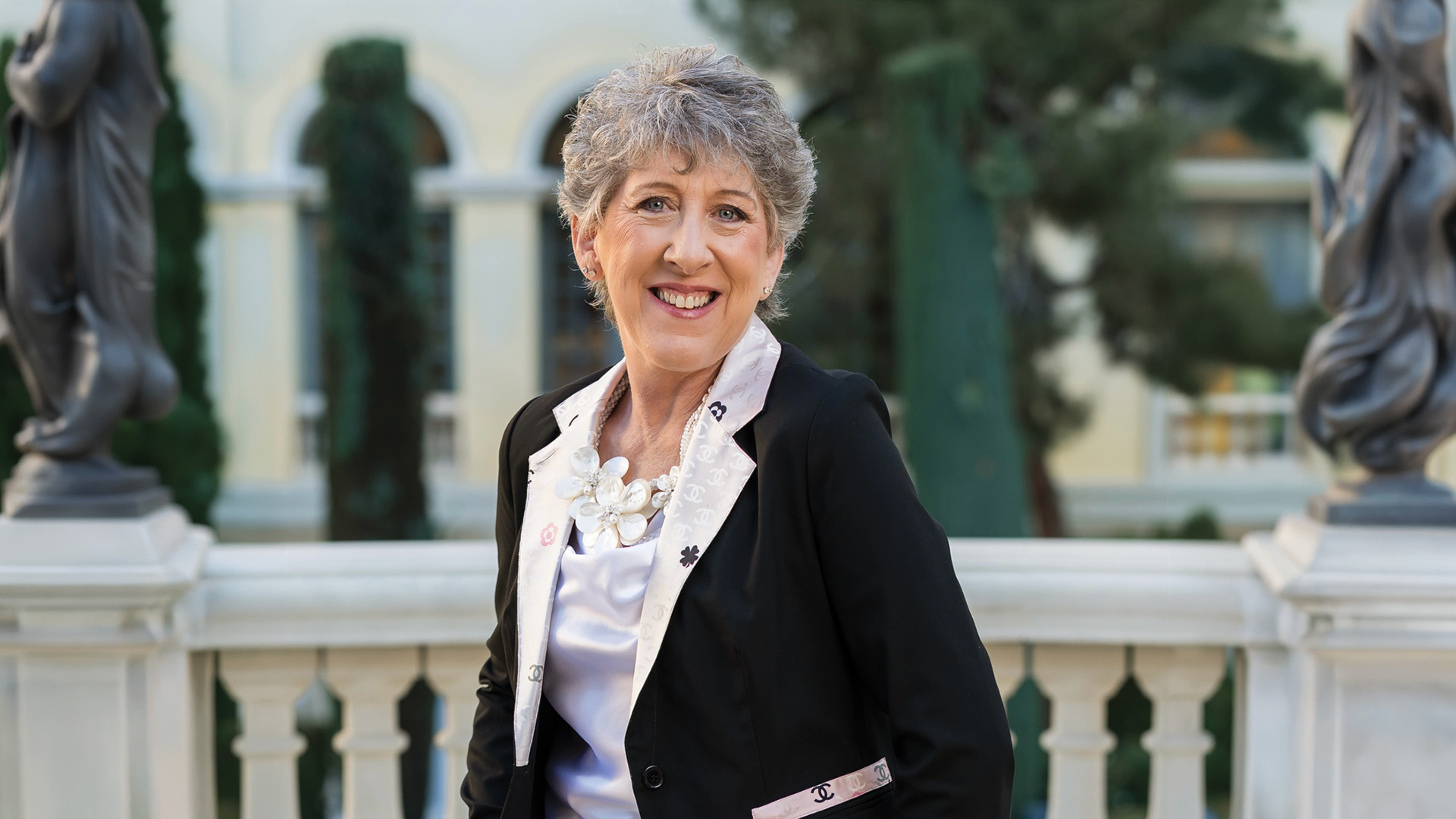
There are journeys that reveal themselves through visible milestones, and then there are those that unfold with a quieter, more deliberate intensity, layered through reflection, shaped by experience, and ultimately defined by purpose. The story of Dr. Carolyn M. Rubin belongs to the latter. It is not merely the account of a seasoned healthcare executive or a respected leadership consultant; rather, it is the evolution of a leader who chose to question whether performance alone could ever constitute meaningful leadership.
The Origin of a Human-Centred Leadership Philosophy
For over three decades, Dr. Rubin operated within the demanding framework of healthcare leadership, navigating operational complexity, organisational integration, and large-scale transformation with composed authority. Yet beneath this structured success, a quieter realisation began to take shape, one that could not be addressed through efficiency alone.
She observed that many professionals, despite their competence, were expected to perform and adapt without being fully supported in their own internal development. Leaders appeared accomplished yet inwardly fatigued; teams functioned but often lacked clarity; individuals advanced while still questioning their confidence and purpose. What emerged was not a gap in skill, but a gap in deeply human leadership.
It was from this realisation that Carolyn M. Rubin Consulting was established in 2014, envisioned as an extension of her life’s work. The consultancy sought to create spaces where leadership could be understood not merely through outcomes, but through presence, emotional intelligence, and alignment. As she articulates, “Leadership is not only measured by what one accomplishes; it is measured by who becomes stronger, braver, and more aligned because they have encountered your presence.”
The Turning Point: When Leadership Became a Calling
The defining shift in her journey did not arise from a singular external milestone, but from an internal recognition that altered her understanding of impact. Dr. Rubin came to realise that her most enduring contribution was not embedded in systems improved or outcomes delivered, but in the individuals she helped transform.
It was in the quieter, often unseen moments, guiding a hesitant professional towards clarity, mentoring a leader through uncertainty, or encouraging someone to rediscover their voice, that she perceived the deeper continuity of her purpose. This moment of clarity became her turning point, reframing leadership from a role she performed into a responsibility she consciously chose to steward.
Choosing Purpose Over Convention
The decision to expand beyond traditional executive leadership was neither impulsive nor uncomplicated. The conventional path, remaining within established structures, offered stability and recognition. Yet, as Dr. Rubin reflects, purpose rarely aligns with comfort.
She was compelled by a growing conviction that her work was meant to extend beyond any single organisation. Her experiences began to feel less like personal accomplishments and more like a body of insight intended for wider impact. This realisation would later find expression in EmpowerFuse, a platform designed to foster meaningful dialogue and inspire individuals across professional and personal landscapes.
The Unseen Middle: Endurance Without Applause
To inquire whether her journey was free of doubt would be to overlook its most human dimensions. Like many purpose-driven founders, Dr. Rubin encountered moments of uncertainty, periods when the weight of responsibility and the demands of expansion felt particularly intense.
The challenge, however, was not a lack of belief in her mission, but the discipline required to continue when outcomes were not immediately visible. It demanded patience, faith, and a sustained commitment to purpose.
“The unseen middle,” she reflects, “is where one discovers whether one is committed to applause or to purpose.” It was this understanding that enabled her to continue, guided not by certainty but by conviction.
Redefining Strength Through Empowerment
One of the most significant lessons in Dr. Rubin’s journey emerged from a reassessment of strength itself. Earlier in her career, she had equated strength with endurance, the ability to carry responsibility, absorb pressure, and sustain momentum independently.
Over time, she came to recognise that true leadership is not defined by solitary resilience, but by the capacity to cultivate strength in others. It is not about being indispensable, but about enabling others to discover their own capability and confidence.
This shift—from carrying responsibility to multiplying it fundamentally reshaped her leadership philosophy, rendering it more relational and sustainable.
The Evolution of Success: From Achievement to Alignment
In its earlier conception, success was defined through familiar markers recognition, advancement, and measurable outcomes. While these dimensions remain relevant, her understanding has evolved into something more nuanced.
Today, success is defined by alignment the integration of identity, purpose, and action. It is reflected not merely in what is achieved, but in how that achievement resonates within individuals and organisations.
For Dr. Rubin, success is found in moments of transformation: when a leader finds their voice, when a team gains clarity, or when an individual begins to believe in their own potential once more.
Leadership as a Relational Responsibility
At the philosophical core of her work lies a belief both simple and far-reaching—that leadership is fundamentally relational. It is expressed not through authority alone, but through presence, integrity, and the ability to influence meaningfully.
This perspective carries with it a profound responsibility. Leaders shape not only outcomes but cultures. The environments they cultivate and the values they embody inevitably influence those who follow.
“Every leader leaves an imprint,” she observes. “The question is whether that imprint empowers, heals, and elevates others.”
A Legacy Defined by Awakening
As Dr. Rubin continues to expand her work across consulting, media, and thought leadership, her vision of legacy remains rooted in human impact. She does not measure success solely by scale, but by the depth of transformation her work inspires.
She envisions a legacy defined by individuals who, having encountered her work, choose to lead with greater courage, compassion, and clarity—individuals who recognise their own worth and step into their potential with renewed conviction.
Reflecting upon her journey, she offers a final insight: “You do not need to have every answer before you begin. Often, readiness is not the starting point; it is the result of courage.”
In an era that equates leadership with visibility, Dr. Carolyn M. Rubin’s narrative offers a more enduring proposition—that the most meaningful leadership is cultivated not in prominence, but in the quiet, deliberate act of becoming.
